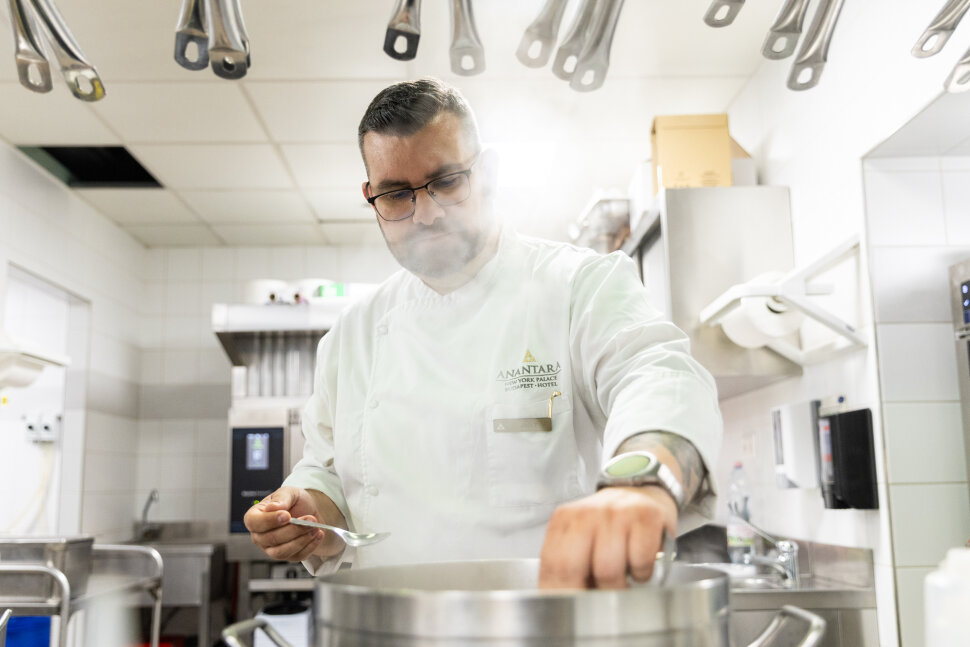
“My greatest success is seeing young chefs carry forward what they learned from me” – Meet Zsolt Abrudán, Executive Chef of the New York Café

The Anantara New York Palace Budapest Hotel is home to several distinct gastronomic venues: the iconic New York Café, The Poet Bar, the Atrium, the hotel’s breakfast service and room service, as well as the White Salon. Each operates with its own unique style and logistical requirements.
Despite the complexity of managing such diverse outlets, Executive Chef Zsolt Abrudán has had a comprehensive understanding of the operation from the very beginning. He works closely with suppliers and staff alike, although a significant part of his day is spent in front of Excel spreadsheets.
In this interview, he reflects on his 23-year culinary career—from his studies at the Gundel Károly Hospitality School and his years in England to leading a 57-member kitchen team and overcoming the challenges of working in a historic landmark building.
He wanted to become a Forester – instead, he found his calling in hospitality
- Many chefs know from an early age that they want to work in the kitchen, but in your case, a childhood disappointment at school also influenced your career choice. How did your story begin?
- Zsolt Abrudán: In primary school I had two career dreams: I wanted to become either a forester or a chef. In the end, my biology teacher wasn't particularly encouraging, so I gave up on forestry and enrolled at the Gundel Károly Hospitality School instead. During my studies, I had the opportunity to work alongside outstanding professionals such as Gábor Fábián and Executive Chef László Héjja at the Béke Hotel.
After graduating, I joined the Hyatt Hotel (later Sofitel), where I worked with Sous Chefs Attila Nagy and Tamás Szalai. That experience still shapes the way I approach both my work and the people I work with today. It was at the Focaccia restaurant that I first realized this wasn't simply a job—it was truly my vocation.
- After gaining experience in Hungary's hotel industry, you decided to work abroad. What did your years in England give you?
- Zsolt Abrudán: My years in England were a completely new and refreshing experience. I was introduced to a different culture, mindset and way of thinking. I had the chance to work with many excellent professionals both in Hungary and abroad, and to take part in countless events and functions, all of which broadened my experience. What I love most about this profession is that there is always a new challenge to solve, while also allowing room for creativity.
Leading a 57-Person Kitchen Team in a Historic Building
- The culinary offering at the Anantara New York Palace is incredibly diverse. What does being Executive Chef mean for you in practice, and what does a typical day look like?
- Zsolt Abrudán: To me, it means being a strong leader who pays attention to details as well as to people. It requires both a constructive and creative mindset.
Every day is different, but I usually arrive at the hotel between 8:00 and 8:30 a.m., after taking my daughters to school. One thing never changes: I greet every member of the team, shake hands with them, and ask how they're doing. That human connection is extremely important to me.
After that, I go through the daily breakfast checks, attend meetings, and work on planning and operational tasks. As a five-star hotel that also includes the New York Café, I am responsible for everything from breakfast service and restaurant operations to banquets and large-scale events. There is always something happening.
Managing such a large operation alone would be impossible. How big is your team, and how often do you still cook yourself?
- Zsolt Abrudán: Our kitchen team currently consists of 57 people, which I believe is quite unique in Hungary.
Nowadays, I'm mainly present in the kitchen during special events or major functions. I have an excellent team and outstanding deputy chefs who keep everything running smoothly. My focus is primarily on organization, making sure everyone has the information they need and that all the necessary conditions are in place for them to succeed.
The biggest challenge is that I can't be in several places at once. Many processes happen simultaneously in different parts of the hotel, so some days feel like a nonstop marathon.
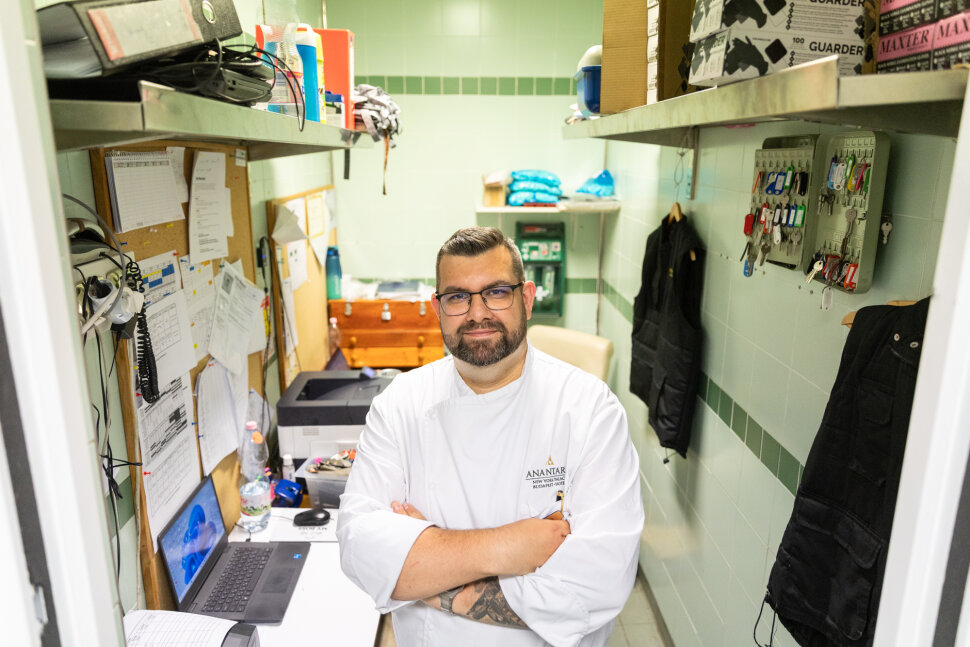
- How much of your operation follows a carefully planned script, and what never becomes visible to guests?
- Zsolt Abrudán: Everything we do follows a highly structured system. The main reason is that our kitchen was never designed for the level of production we handle today. On top of that, we're operating in a protected historic building, which makes expansion extremely difficult—if not impossible.
I'm a bit of a perfectionist when it comes to planning. I calculate everything in advance and have trained my team to work the same way. Whatever challenges arise behind the scenes, guests should never notice them. That said, there are always special events or unique requests that allow us to express our creativity, and we truly enjoy those opportunities.
Quality, special dietary needs and how guests have changed over the last 23 years
- You've been in the profession for more than two decades. Looking back, what has changed the most in gastronomy?
- Zsolt Abrudán: I've been working in this profession for 23 years, and a great deal has changed during that time. The biggest transformation has been the way guests think about restaurants.
I believe quality awareness has evolved the most. When I started, guests expected large portions and a wide selection. Today, they are looking for high-quality, fashionable and healthy food. The industry has changed enormously in this respect, although I still think there are some misconceptions. Sometimes we're not even entirely sure what "healthy" or "sustainable" really means.
Guests actively look for these choices, and they're genuinely appreciative when they see that we provide them—not just in the simplest possible way, but with the same level of care and creativity as every other dish.
As for where Hungarian gastronomy is heading, it's difficult to predict. One thing is certain: the variety of dining options has expanded tremendously, both in Budapest and across the country. Today's challenge is maintaining consistent quality and continuous attention to detail.
Personally, I would like to see more restaurants placing greater emphasis on Hungarian cuisine, local ingredients and traditional Hungarian flavours.
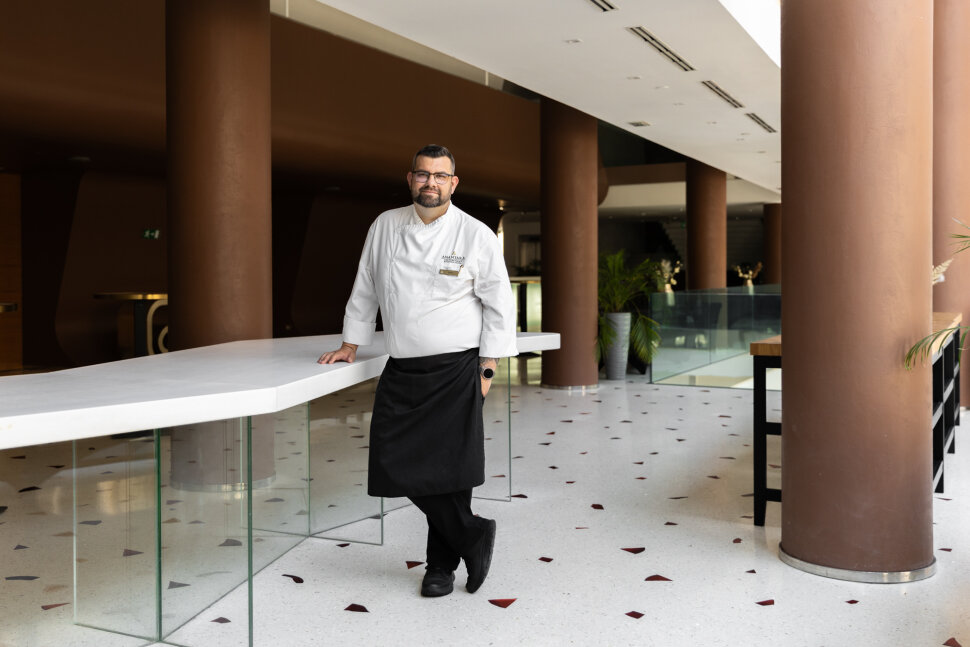
- Has it become more difficult to meet guest expectations in the age of smartphones and social media?
- Zsolt Abrudán: Absolutely. Because of the internet, it's increasingly difficult to exceed guests' expectations.
Today it's considered standard that a venue creates memorable moments throughout the entire guest journey—from arrival to departure. These small details help maintain attention and elevate the overall experience.
This trend has fundamentally changed the way we work and think. Planning has become far more detailed, and we're constantly challenged to step outside our comfort zones. Even something as seemingly simple as introducing a new menu now requires an incredible amount of preparation.
From the 130th anniversary celebration to hosting Paris Saint-Germain
- In a hotel of this size, unexpected situations are inevitable. What has been the biggest professional challenge you've faced so far?
- Zsolt Abrudán: It always depends on the situation.
One major challenge was organizing the New York Café's 130th anniversary celebration for 750 guests. Another was when we had less than two weeks to plan, organize and execute the arrival of Paris Saint-Germain, followed by a 700-person post-match event.
- With such a fast-paced environment, there must be moments when decisions have to be made in seconds. Has that happened in the kitchen?
- Zsolt Abrudán: Of course. I remember one formal gala dinner where, just as the host was introducing the menu, we realized there was a mistake in the printed version. There was a frantic rush behind the scenes, but we solved the problem, and the guests never noticed anything. Situations like that remind you that quick decision-making is simply part of a chef's everyday life.
- Finally, what do you consider your greatest professional achievement?
- Zsolt Abrudán: I don't measure success by the number of events I've organized or by individual occasions.
For me, the greatest achievement is having had the opportunity to work with so many people over the years. Many of the young professionals who once trained alongside me or started their careers with me are now executive chefs or sous chefs themselves. They continue to apply the mindset, values and knowledge that we built together.
That, to me, is real success.