World stars, special requests and exclusive experiences – how Áron Szűcs, Chief Concierge of Anantara, makes guests’ Budapest stays unforgettable

In a luxury hotel, many people work behind the scenes whose efforts remain invisible to guests, yet play a decisive role in making a trip truly memorable. The concierge is exactly such a position: the person who knows which restaurant is worth booking, how to get tickets to a sold-out performance, or what kind of program can make a Budapest visit truly special.
This year, the Anantara brand celebrates its 25th anniversary worldwide. On this occasion, we launched our “Meet the Team” series, in which we introduce team members of the Budapest property, the Anantara New York Palace Budapest Hotel, who work every day to turn guests’ stays into real experiences.
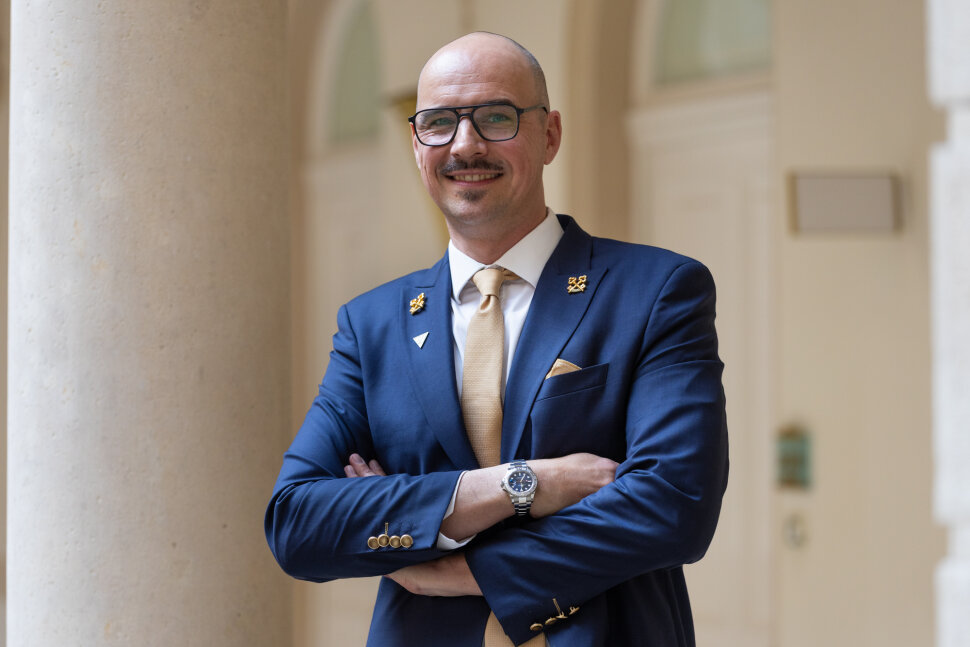
In the second part of the series, we spoke with Áron Szűcs, Chief Concierge of the hotel. He has been working in the industry for over two decades and knows exactly this: guests’ wishes can sometimes be quite surprising, but his role is to find solutions for them.
– How did you end up in the hotel industry, and when did your concierge career begin?
Áron Szűcs: Completely by chance. My father was a trumpet artist and teacher who taught at the Liszt Academy of Music for three decades, and my mother is an economist. So no one in my family worked in hospitality. A former classmate of my brother worked in a hotel, and through him I got close to this world. In my early twenties, I didn’t know what career to choose, so I gave it a try, grew to love it, and stayed.
I started my career in 1999 at the Gellért Hotel as a receptionist, but I also worked night shifts, as a cashier, and as a porter (back when those roles still existed).
– How did your path lead to the Anantara New York Palace Budapest Hotel?
SzÁ: I have a long-standing connection with the New York Palace. In 2008, I joined as a concierge, already as a member of the Hungarian Golden Keys Association, though the ownership was different back then. In 2013, I worked in Vienna, then returned to Budapest and held other positions in smaller hotels. I came back in 2017, so altogether I’ve spent 13 years at the New York Palace.
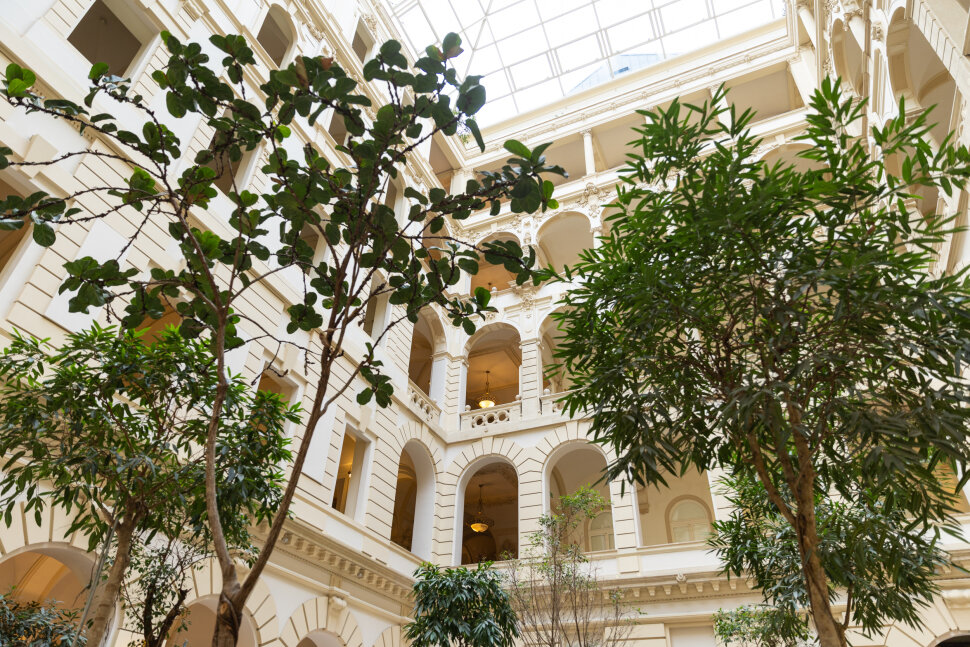
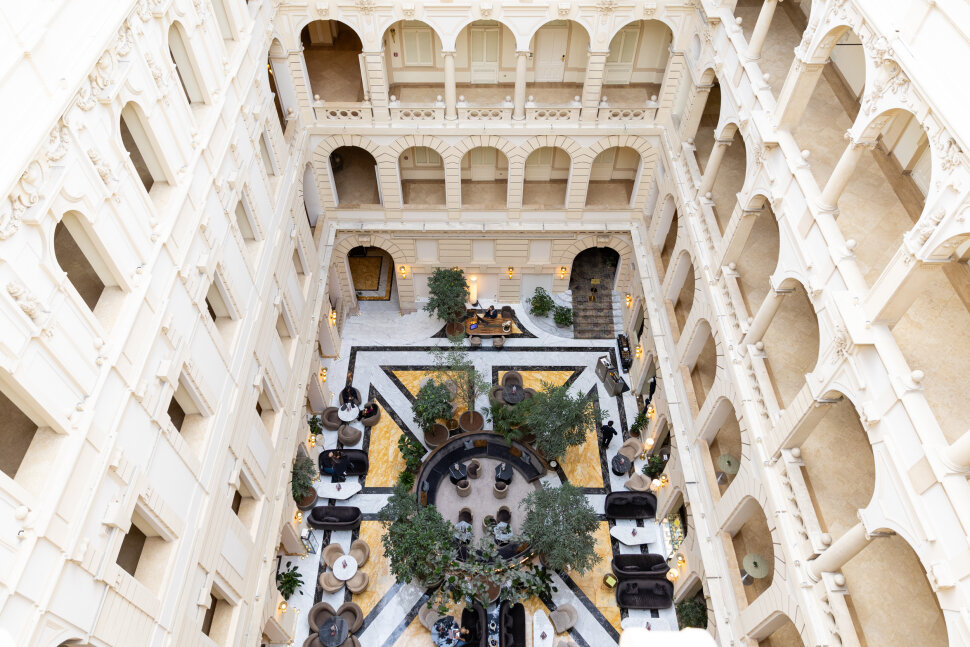
– So you know the building quite well by now. What does a typical day look like for you as a concierge?
SzÁ: At the hotel, there are three concierges working in two shifts: from 6 a.m. to 2 p.m., and from 2 p.m. to 10 p.m. I usually work the morning shift.
At the start of the shift, we check emails and transfers for the day and arrange new ones if needed. Then we review the concierge handover: city tours, boat trips, restaurant reservations, in-room amenities. After that, we coordinate with other departments and partners - Reception, Bellboys, Guest Relations, limousine companies - to ensure everything runs smoothly.
The rest of the day is dedicated to guest requests. A concierge helps with anything during a guest’s stay: opera boxes, marriage proposals, tailored or running shoes, even rare LEGO sets. Basically anything as long as it’s ethical.
– Is there a request that has remained particularly memorable for you?
SzÁ: Vienna, 2013. Anna Netrebko debuting at the Opera in Eugene Onegin as Tatyana. Completely sold out, the hotel full of Russian guests—many without tickets. Seats were being sold for huge sums, and there was real tension about whether we could secure them. In the end, we pulled every string and succeeded—but it was quite a process.
– How different was the profession when you started?
SzÁ: Very different. When I started, there were four computers at the desk, and only one had internet. We also shared a single card terminal.
In the 2000s, you had to memorize phone numbers, addresses, opening hours—you couldn’t just reach into your pocket and have a smartphone with all the answers. You relied much more on experience and connections. Technology helps a lot today. Although more and more guests use concierge services, the profession is still surrounded by a certain mystique.
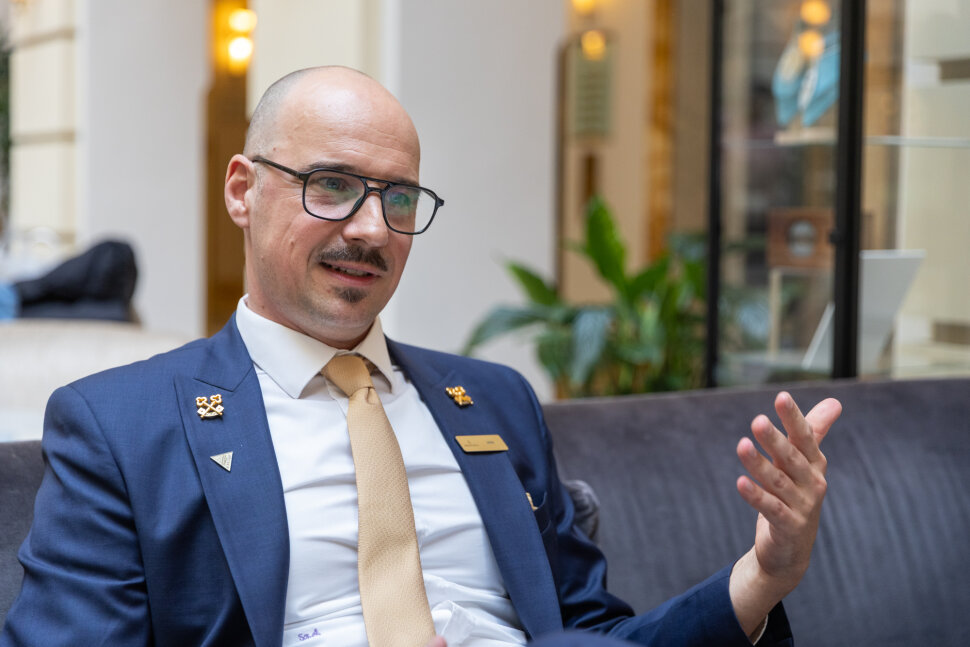
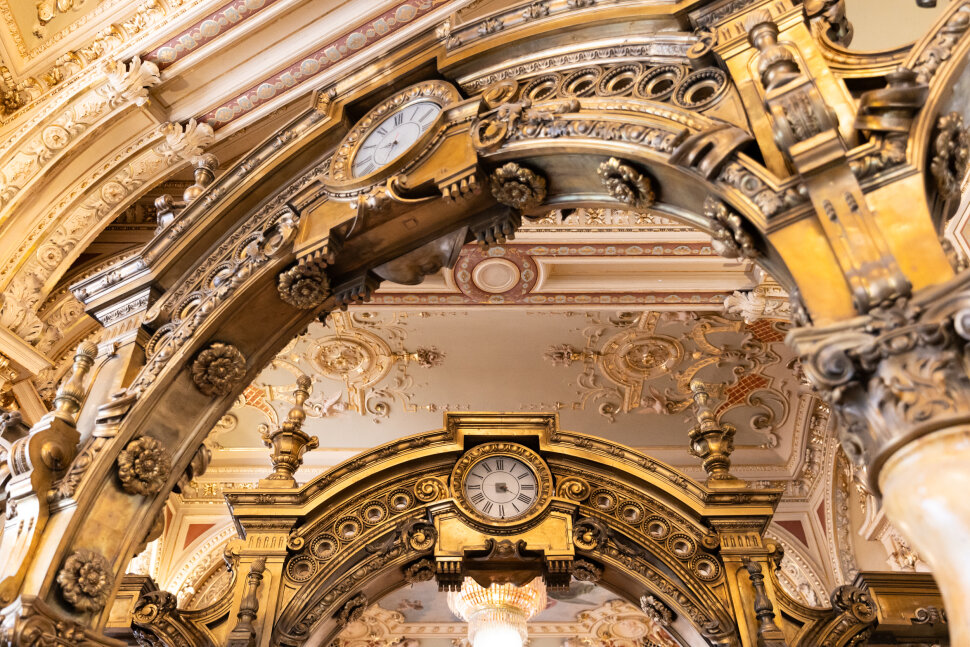
– Many people know the concierge profession from films. How much do you think that shaped perceptions?
SzÁ: Films like The Grand Budapest Hotel or For Love or Money helped draw attention to the hotel industry and concierge work. I recommend them to anyone interested in the field—or just curious about what happens behind the scenes.
– What skills are needed for this job?
SzÁ: Confidence, awareness, and strong knowledge of people and places are essential. You need to adapt quickly to different situations and stay open-minded. Language skills and a strong network are also very helpful. And of course, fast problem-solving and multitasking are indispensable.
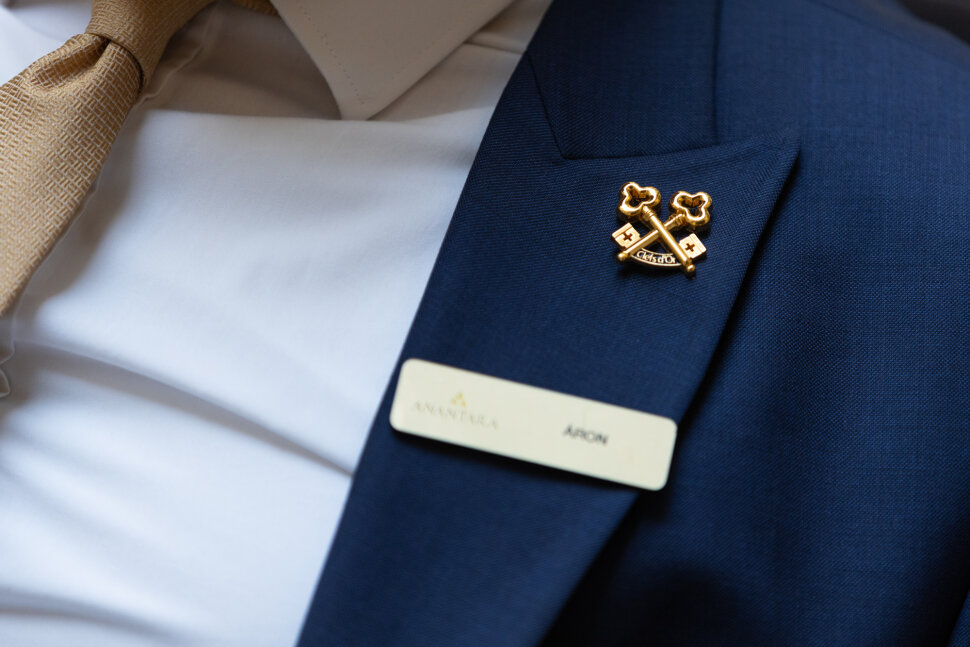
– The golden keys pin on your jacket is becoming familiar to many guests. What does it represent?
SzÁ: I joined the prestigious Les Clefs d’Or in December 2007, which was a great honor. Founded in 1952 in Cannes, the association now has around 4,000 members in 530 cities across 80 countries. It’s the international professional organization of concierges.
Earning the Golden Keys is a serious professional recognition and serves as a mark of quality for guests and hotels alike. To apply, you need five years of front office experience - at least two as a concierge - plus a CV, motivation letter, and recommendations from two existing members.
The company recommends that a Golden Keys concierge be available to guests 16 hours a day, across two shifts. In Hungary, about 50 Golden Keys concierges work across 28 hotels, which is quite a strong ratio for a country of this size.
The organization was founded in 1952 in Cannes, and today it operates in more than 80 countries and 530 cities worldwide, with around 4,000 members. The Golden Keys represent a form of professional certification: members are part of an international network whose motto is “Service through friendship.”
– You meet a lot of people in your work—many famous ones too?
SzÁ: Quite a few. The one who had the greatest impact on me was the Dalai Lama, who even gave me a blessing. That was a very special and memorable moment.
In such cases, the concierge team ensures that their programs and requests run as smoothly as possible.
– When a guest turns to you for advice, what Budapest experiences do you recommend?
SzÁ: We have so-called Anantara Signature Experiences. One popular example is the VW Samba tour.
This uses a 1962 Volkswagen Type 2 Samba, where guests explore Budapest in a vintage, open-roof vehicle with a passionate driver-guide. The tour covers major sights as well as the city’s most photogenic, “Instagram-friendly” spots. It’s customizable: typically 2–4 hours, with optional park stops. In good weather, guests can even request a picnic basket prepared by the hotel’s Executive Chef.
Danube cruises are also extremely popular. During a private boat trip, guests can admire the historic city center—a UNESCO World Heritage panorama—from the river, taking in iconic landmarks such as the Hungarian Parliament Building, Buda Castle or Gellért Hill, along with bridges and newer cultural sites like the Hungarian National Theatre and Müpa Budapest.
A truly special experience is the “Soar And Sip from Vineyard to the Clouds” program with Péter Besenyei. It starts with a scenic drive to the pilot’s estate, where guests are welcomed by the founder of Red Bull Air Race. Then comes a tandem flight tailored to their preferences—from calm panoramic flying to spectacular aerobatics. After landing, a picnic follows with local delicacies and Hungarian wines such as Tokaji and Bikavér, while the host shares stories about flying, his career, and his passion for wine.
Experiences like these show just how much Budapest has to offer for those open to new adventures. And the team at the Anantara New York Palace Budapest Hotel works every day to ensure that guests leave not only with memories of the city’s landmarks, but also with truly special moments.